


What Is Managed IT Services? Understanding IT Infrastructure Managed Services
Modern businesses run on technology — and not just cloud apps and laptops, but the deeper networking, cybersecurity, storage, and computing layers that keep operations alive. Maintaining that stack is expensive, specialized, and time-consuming. That reality is why managed IT services have become one of the fastest-growing segments in the technology outsourcing market. At the center of this shift is a strategic model known as IT infrastructure managed services, where organizations rely on external specialists to support, secure, and optimize their IT environments.
This guide breaks down what managed IT services are, why businesses use them, how the pricing works, and what types of use cases deliver the biggest value — especially for companies balancing growth, competition, and cost control.
What Are Managed IT Services?
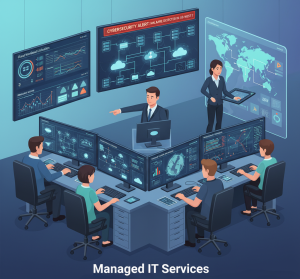
Managed IT services are an outsourcing model where an external provider assumes responsibility for a company’s technology assets, systems, and operations. Instead of dedicating internal teams to monitor networks, patch servers, troubleshoot issues, or secure endpoints, businesses outsource these functions to a managed service provider (MSP).
Unlike traditional break/fix support, managed IT services are proactive. MSPs prevent problems rather than waiting for them to occur. They may monitor system health, apply patches and updates, manage cloud workloads, deploy cybersecurity protections, and provide help desk support. The model allows internal staff to focus on innovation and strategy while MSPs handle operational complexity.
Why IT Infrastructure managed services Matter for Modern Businesses
Businesses today operate in a hybrid world. Their workloads might run on-premises hardware, in public cloud platforms such as AWS or Azure, or through SaaS solutions like Microsoft 365. Meanwhile, cyber threats are increasing in both frequency and sophistication. This landscape makes IT infrastructure managed services more relevant than ever.
Organizations adopt these services for three key reasons: cost efficiency, access to expertise, and scalability. Paying for an MSP is often less expensive than hiring full-time specialists in networking, cloud, and cybersecurity. MSPs are staffed with professionals whose full-time focus is IT architecture, cybersecurity, and systems engineering. And because services scale as business needs evolve, organizations can grow without continuously rebuilding their IT departments.
Core Components of Managed IT Services
Network and Infrastructure Management
This includes routers, switches, servers, load balancers, SD-WAN, Wi-Fi, and virtual computing resources. Failures at this layer cause downtime, and downtime has financial consequences. For industries such as healthcare, retail, manufacturing, and finance, infrastructure outages interrupt real-world operations and customer experiences.
Cloud and Virtualization Services
MSPs manage public, private, and hybrid cloud environments. Services may include workload migration, monitoring, modernization, and cost optimization. Cloud adoption often outpaces internal cloud literacy, making managed services essential for preventing misconfigurations or overspending.
Cybersecurity and Compliance
Security is one of the top drivers of MSP adoption. Offerings range from endpoint protection and firewalls to SOC monitoring, threat detection, vulnerability scanning, and identity management. Compliance services — including HIPAA, GDPR, PCI-DSS, and financial regulations — add strategic value beyond basic protection.
End-User Support
Help desk support covers remote troubleshooting, device provisioning, software updates, and user onboarding. As remote and hybrid work environments expand, MSPs ensure users remain productive regardless of location.
Backup and Disaster Recovery
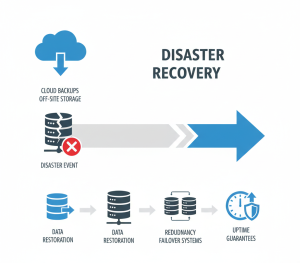
Managed backup and disaster recovery protect business continuity against ransomware, hardware failures, natural disasters, and human error. MSPs build and maintain recovery strategies to reduce downtime and data loss.

Types of Managed IT Services
Different operating models support different business needs. Fully managed services allow MSPs to take over entire IT operations, minimizing the need for internal teams. Co-managed services blend MSP expertise with an internal IT department, making it ideal for mid-market companies. Managed cloud services focus on IaaS and SaaS management, while managed security services specialize in cybersecurity and are often delivered through MSSP providers with SOC capabilities.
Benefits of Managed IT Services
Managed services deliver measurable business outcomes.
Predictable Operational Costs
Hiring internal specialists is expensive. Infrastructure engineers, cybersecurity analysts, cloud architects, and compliance officers command premium salaries. MSP pricing is predictable and tied to service agreements rather than headcount.
Improved Security and Reduced Risk
MSPs continuously monitor systems for threats and abnormal patterns. Their security stack often includes advanced tooling that smaller businesses cannot justify purchasing independently.
Enhanced Productivity and Performance
IT bottlenecks slow digital workflows. Managed services optimize applications, networks, and devices to improve user experience and performance.
Scalability for Growth
Whether expanding remote teams, opening new branches, or launching new applications, managed services scale without slow recruitment cycles or major capital investments.
Better Business Focus
Managed services shift technology management away from operational overhead and toward innovation, strategy, and customer outcomes.
Practical Use Cases
Common use cases include cloud migrations, digital transformation initiatives, cybersecurity modernization, cost reduction, hybrid workplace enablement, compliance management, and business continuity planning. Regulated industries such as healthcare, insurance, finance, and energy often adopt managed services due to strict compliance requirements, but mid-market and general commercial sectors benefit as well.
Common Pricing Models for IT Infrastructure Managed Services
MSPs offer structured pricing to support predictable budgeting. Popular models include per-device pricing, per-user pricing, tiered pricing, à-la-carte options, and all-inclusive packages. Pricing varies based on IT complexity, cloud footprint, cybersecurity needs, regulatory environment, geographic location, and SLA requirements. Mid-market and enterprise clients with complex regulatory or cloud environments often pay more than small businesses but gain higher strategic value from the partnership.
How IT Infrastructure Managed Services Support Business Transformation
Digital transformation requires secure networks, reliable data access, cloud infrastructure, modern endpoint provisioning, and continuous uptime. IT infrastructure managed services supply this foundation by making infrastructure predictable, secure, and scalable. Without these fundamentals, transformation investments stall, delayed projects accumulate, and customer experience suffers.
The Strategic Role of MSPs in the Cloud Era
Cloud adoption has reshaped IT. Instead of buying servers every few years, companies pay monthly for compute, data, storage, and applications. Cloud reduces capital expenses but increases architectural complexity. MSPs prevent misconfigurations, security failures, and cost overruns by monitoring cloud workloads and optimizing resource consumption.
Managed Services for Cybersecurity
Cybersecurity outsourcing is one of the fastest-growing MSP segments. Threats such as ransomware, phishing, credential theft, and supply-chain attacks continue to rise. MSP cybersecurity programs commonly include endpoint detection and response, SOC monitoring, vulnerability scanning, threat intelligence, zero-trust frameworks, identity management, SIEM platforms, and business continuity strategies. The result is stronger defense at a lower cost than building in-house security functions.
Who Should Consider Managed IT Services?
Managed services suit companies that lack specialized IT staff, need to scale quickly, face compliance or security requirements, operate remote or hybrid teams, or maintain uptime-critical systems. Industries with aging infrastructure also benefit because MSPs modernize environments without operational disruption.
Companies migrating workloads to cloud infrastructures often rely on IT infrastructure managed services to reduce downtime and avoid configuration errors. Organizations with limited cybersecurity resources use IT infrastructure managed services to access advanced monitoring and threat detection capabilities. Growing businesses implement IT infrastructure managed services to standardize processes across offices and departments. As digital transformation accelerates, IT infrastructure managed services become the backbone of modernization efforts. Remote work environments depend on IT infrastructure managed services for secure connectivity and device management. Compliance-regulated industries adopt IT infrastructure managed services to meet strict standards for documentation and auditing. Mid-sized firms use IT infrastructure managed services to replace aging network gear and outdated servers. With cloud costs rising, IT infrastructure managed services help optimize spending and reduce waste. Companies seeking to minimize cybersecurity incidents use IT infrastructure managed services to gain visibility, governance, and resilience.
The Future of Managed IT Services
Four major trends are shaping the future: AI-driven automation, cybersecurity-first MSP models, cloud ecosystem orchestration, and outcome-based service agreements. As AI improves predictive detection and automated patching, MSPs will prevent more failures before they disrupt operations. As security threats grow, cybersecurity will become the core value of managed services rather than an add-on. Multi-cloud environments will require orchestration and governance rather than simple hosting. Customers will increasingly expect business outcomes such as uptime, compliance adherence, and cost efficiency instead of basic support hours.
Conclusion
Managed IT services have evolved from outsourced help desk support into strategic enablers for modernization, security, and digital growth. As infrastructure becomes more hybrid, customers more demanding, and cybersecurity more critical, the managed service model will continue to expand. For businesses seeking cost efficiency, expertise, and scalability, managed services deliver predictable value without sacrificing control or visibility. Managed IT is no longer just technical support — it is a competitive differentiator for modern organizations.